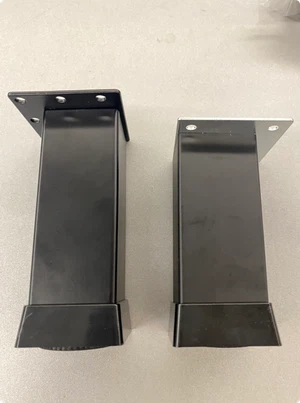
Anodized black VS Powder coating Black
Sep 26, 2025
Leave a message
The table below summarizes the key differences to help you compare them at a glance.
| Feature | Anodized Black Finish | Powder Coating Black |
|---|---|---|
| Process Principle | An electrochemical process that creates an integrated, porous oxide layer on the metal surface, which is then dyed black and sealed. | Applying a dry, thermoplastic polymer powder electrostatically, then heating to melt and cure it into a solid, continuous film. |
| Base Material | Primarily for aluminum and its alloys; also possible for magnesium and titanium. | Suitable for a wide range of materials, including various metals and some plastics. |
| Appearance & Color | Color originates from dye infused into the porous layer. Can achieve a deep, metallic-rich black. Hard anodizing typically produces a darker, denser gray-black. | Color comes from pigments mixed in the powder. Can achieve a very deep "piano black" with high gloss. Offers a wide range of textures (gloss, matte, textured). |
| Durability & Thickness | The coating is very hard (hard anodizing can reach 500-900 HV) and integral to the metal, making it highly resistant to abrasion and wear. Layer is thin (5-30µm for standard, 25-250µm for hard). | The coating is thicker than anodizing, providing excellent impact resistance and flexibility, which helps resist chipping and cracking. It is less hard but more forgiving under impact. |
| Corrosion Resistance | Excellent. The oxide layer is highly resistant to corrosion. | Excellent. The thick, non-porous film provides a superior barrier against moisture and chemicals. |
| Key Considerations | Not suitable for iron/steel. Color is permanent. Difficult to touch up if damaged. Electrical insulator. |
Do you know the following legs' finish methods?