


Classification of Resistance Welding
Apr 20, 2026
Leave a message
Classification of Resistance Welding Resistance welding is divided into spot welding, seam welding, projection welding, and butt welding.
- Spot Welding Spot welding is a resistance welding method in which workpieces are assembled into a lap joint and pressed between two cylindrical electrodes. The resistance heat melts the base metal, forming a weld nugget. It is mainly used for welding thin sheets. Common metal products in furniture applications: Wire grid shelves, chair frames, Sofa legs, metal mesh panels, drawer slides, and brackets for office furniture.
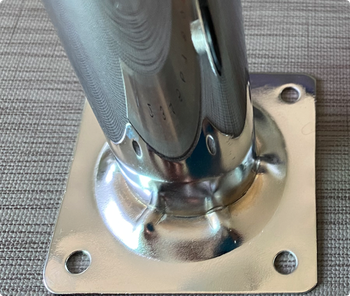
- Seam Welding Seam welding is similar to spot welding, but the cylindrical electrodes are replaced by rotating disc-shaped roller electrodes. The workpieces are assembled into a lap or butt joint and placed between the two rollers. The rollers apply pressure and rotate, while the current is applied continuously or intermittently, producing a continuous weld seam. Seam welding is mainly used for structures with regular weld seams that require sealing, and the sheet thickness is generally below 3 mm. Common metal products in furniture applications: Seam-welded steel tubes for chair and table frames, continuous seams on metal cabinet bodies (e.g., filing cabinets), decorative trim strips, and sealed tubular legs.

- Projection Welding Projection welding is a variant of spot welding. One of the workpieces has preformed projections (embossments). During projection welding, one or more nuggets can be formed at the joint simultaneously. Common metal products in furniture applications: Welded nuts or studs on furniture brackets, cross-wire junctions in wire shelves or grilles, hinge reinforcements, and embossed joints in stackable metal chairs.
- Butt Welding Butt welding is a resistance welding method in which the workpieces are joined along their entire contact surface. Common metal products in furniture applications: Butt-welded rings for table bases, continuous tubular legs (e.g., for stools or desks), frames made from bar stock, and welded hoops for rotating office chair bases.